

From the Streets to the Studio — Lebo Moremogolo's Song of Mercy
4 April 2026
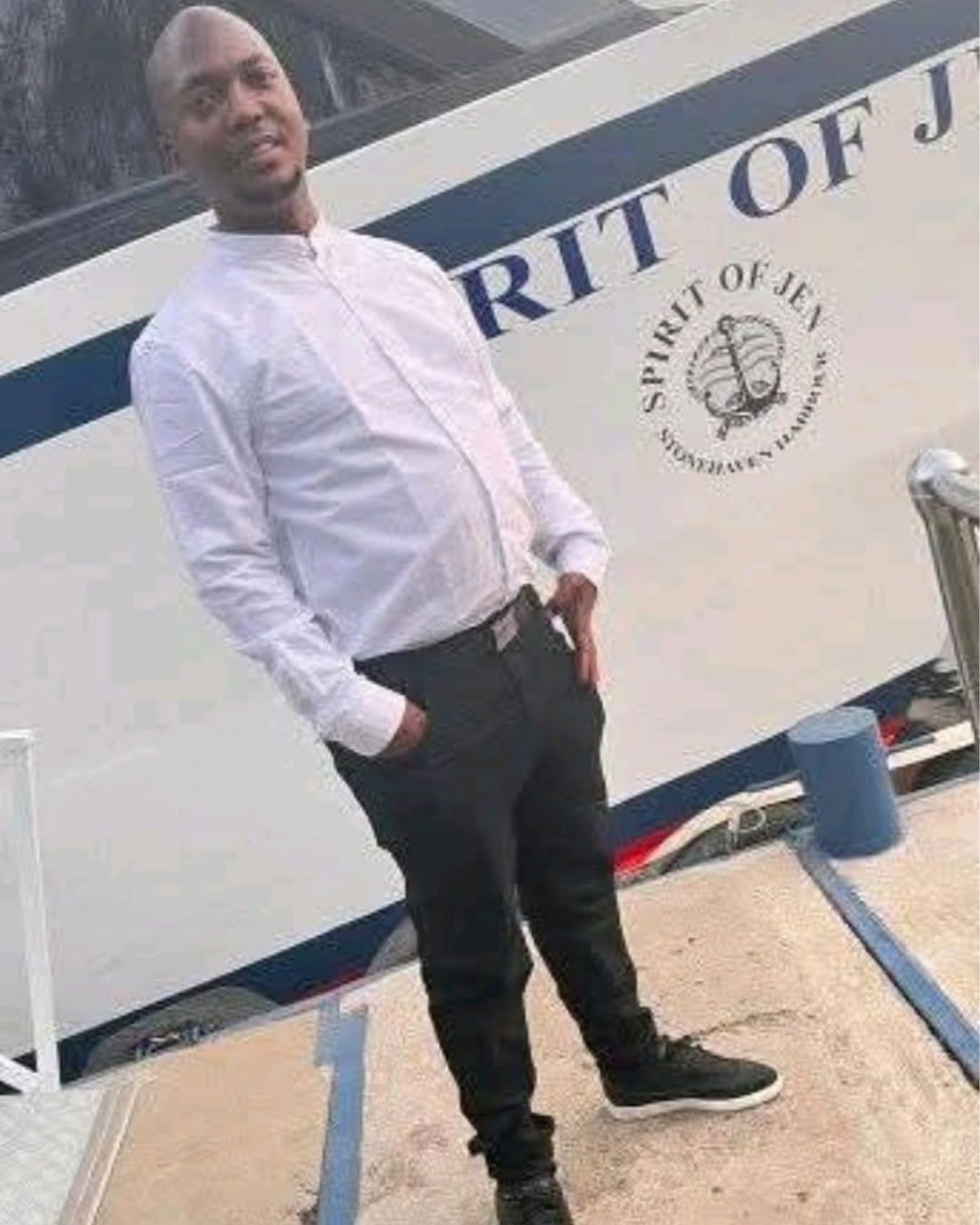
Olebongeng Moremogolo on Testimony Tuesday — JustGospel Radio, March 2026
He lost his father at nine. His mother collapsed under the weight of it. He grew up under the wing of aunts and uncles and a God he didn't fully understand yet. He survived a knife-point mugging, spent three weeks in a hospital ward, and came out with a song. This is Lebo — and this is the story behind Mercy.
His full name is Olebongeng Moremogolo. He goes by Lebo. He is 35 years old, born and raised in the Vaal Triangle, a songwriter, a producer, and a man who has been chased by more things than just muggers. He sat down on Testimony Tuesday at JustGospel and told a story that took over an hour to get through — not because he rambles, but because the testimony is that layered.
It starts in 1999. His grandmother died. His mother, an educational teacher holding three children together alone, did not take it well. And then in 2000, his father died too. Lebo was nine. His brother was 14. His little sister was seven. His mother — already stretched thin — cracked under the weight of it. She was diagnosed with major depression and admitted to Kopano Hospital. The three children went to live with uncles and aunties.
"God shows that he loves you via the surroundings, your people. That's how I first encountered God's love."
He remembers standing outside with his friends after school, watching them sprint toward their fathers coming home from work — the shouts, the hugs, the noise of it. And standing there, realising he had no one to run to. He would go inside and tell his mom. And his mom, tired from a full day of teaching other people's children, would find a way to comfort him. His father loved music and church, she told him. Now he's watching over you. That was enough to send a nine-year-old back outside to play. It shouldn't have been. But it was. That's a mother who knows how God works.
His relationship with church started dishonestly. His mother made them go. He didn't want to go — he wanted to play soccer. The only thing he liked about church was the ten rand his mother gave him for the offering. He would get to the shop beforehand, break it into coins, give one rand to the Lord, and spend the rest on snacks. His little sister, meanwhile, gave the whole ten rand away every single time. He thought she was ridiculous. He may have been wrong about that.
Church became serious in high school, but also for the wrong reason. There were girls. He started dressing better. He started paying attention. And then one Sunday, someone asked the youth to practice preaching. Lebo prepared all week. When the moment came, his knees were shaking. He closed his eyes, said what he had to say, and sat down. Afterwards, grandmothers — old women in suits — came up to him one by one. He didn't understand what had happened. But he started showing up differently after that.
He asked his mother about the family tree. Where did this come from? She told him about his uncle — a pastor. About the way the family grouped together at funerals and sang. He was not an accident. The gift had a bloodline.
Fast forward to 2018. He is a grown man now — a father, living his own life, no longer in his mother's house and no longer obligated to sit in church on Sunday mornings. He had drifted. He was doing Afro pop music, always including God in the lyrics, but living at a distance from the source of that God-talk. On the first of September 2018, at around 4 AM, he was walking back from a night out — tired, intoxicated, wearing big boots that slowed him down.
Two men came out of the dark and started chasing him. He ran. He jumped a wall. They jumped after him. He jumped again and fell — hard — onto his hand. He lay on the ground with two men closing in on him, both carrying knives. He had fifty rand in his pocket, no phone, nothing worth taking. He knew what happened to people in that situation. And then one of the men recognised him. Told him to stop moving. Told him he'd warned him about being in the streets at night.
"God, you're not like this. Please."
They left him. He lay down in that yard, fell asleep, and was woken by a security guard. She walked him to his friend's house. In the morning, the hand was no longer something he could ignore — the alcohol had left his system and the pain came for him in full. His brother came the next day. They went to the clinic. Fractured, not twisted. The bones had separated. He needed a specialist. He needed surgery. He was admitted to Sebokeng Hospital on 2 September 2018.
He waited three weeks for the operation. Each time his name came up, an emergency pushed him back. He was frustrated, angry, tired of hospital food, tired of watching others get operated on and discharged while he lay there with a metal back slab on his arm going nowhere. Then a woman from his church came to visit. She didn't bring food or money. She just came. She sat beside him and told him the story of the disciples in the boat — the storm, the panic, Jesus asleep, and the moment they finally woke him up.
She said: wake up your Jesus.
They prayed. The following morning, Lebo was first in the queue for theatre. He was the last patient left from his original batch — everyone else had long been discharged. The operation happened. He went home. And somewhere in the quiet of his recovery, still with a metal plate and ten screws holding his wrist together, he had a conversation with God that changed the direction of his life.
"God, I'm for you forever. So I started preaching again — but now for the right reason."
That encounter became Mercy. He had been doing Afro pop for years — always naming God, always weaving faith into the lyrics, but looking for the right sound. When the sound finally came to him, he sat alone in his studio and built it. He cried making it. He said it's emotional, but he made it sound good. He sent it to his partner and manager Katleho, who told him to close his eyes and listen to it — not as the artist, but as someone going through something. Someone who needs a hand. Someone who needs the external power.
They are going to run with it. A full album is coming. And alongside the music, Lebo and Katleho are building something else — a Forex trading office in the Vaal, under a partnership with ATFX, with seminars and support teams so that people who know nothing about trading can learn. He is thinking about the community he came from. He has not forgotten where he started.
His parting words on Testimony Tuesday were simple. Pray not only when you need something — pray also when things are going well. And stop telling people your plans before they happen. Do your thing quietly. Let God be the witness. Sometimes God wants you alone before He can work through you properly.
He has a ten-centimetre scar on his wrist and a metal plate underneath it. Ten screws. He laughs about it. He calls it a reminder. Every time he looks at it, he feels the mercy. He feels the grace. That's what Mercy is. Not a performance. A receipt.