

Just Business
From Hockey Stick to Newsroom: Phathisani Moyo on TechCabal, AI and Africa's Tech Money

Prefer the app? Listen to the full episode on Spotify.
How does a political science student end up as a tech editor?
By accident, and Phathisani Moyo is the first to say it. He studied political science and administration in Harare with a plan to work for NGOs and climb to the African Union or the United Nations. Then his father, tired of him hanging around the house during the long university holiday, got him a three-month stint as a proofreader at the Chronicle in Bulawayo.
Friday paydays sold him on the place. Then the All-Africa Games landed in Zimbabwe, a brand new hockey stadium went up in Bulawayo, and the sports desk, which was all football people, realised nobody could cover hockey. Somebody noticed the young man who kept turning up with a hockey stick. He captained his university side and played provincial hockey, so they asked if he knew the game. A little, he said. They told him they would teach him to write, and he never looked back. Within a short time he was travelling to Angola with the national team.
South Africa came the same way. The 2010 World Cup meant the Mail & Guardian wanted a newsroom person who could shift focus from politics to football, and he moved in 2011 after a year and a half in Botswana. Later came Independent Media, where he was news editor at The Star and IOL, then three years at the UN promoting the African Continental Free Trade Area, then ITWeb, and then TechCabal.
What is TechCabal, and why open in Johannesburg?
TechCabal is a pan-African tech publication, about 13 years old, that started by covering startups because nobody else was telling consequential stories about the industry. It now runs four verticals and a team of roughly 140 people across Africa, the UK and the US, with big offices in Lagos and Nairobi. Moyo's argument for a Johannesburg desk is blunt: if you want to call yourself pan-African, you have to be where the money sits, and in his view that is Cape Town and Johannesburg.
He is also proud of what he calls the group-of-companies approach. TechCabal is the flagship, but there is also Coco for younger audiences, a YouTube channel called Headlines, and TC Insights, a research team that does proper multi-month studies for companies wanting to understand a market, such as the state of startups in South Africa or across the continent.
Why does he write about people instead of press releases?
Because the press release version of African tech is boring and, worse, useless to the young founder reading it. Moyo points to a story he wrote on Yoko, the payments company that put card machines into spaza shops and township corner stores, which used to be locked out of the mainstream economy. Two black and two white friends started it, they are still together after all these years, and the company is now going international with a German CEO hired last month.
If a young person reads that story, he will know these people come from the same background as him, and he can start a company too.
That, more than any funding announcement, is the journalism he chases. The ideas are everywhere in Africa, he says. The hurdle is money.
What does he think about AI and South Africa's AI policy?
He does not mince words. A company that fails to adapt to AI is applying for a death sentence, in his view, and he cites firms like Forvis Mazars and Salesforce as examples of businesses working AI into daily operations. A company running at half capacity could get close to full capacity with it, he says, but only if it is used responsibly.
The regulation side is what worries him most. South Africa, he says, missed the boat. When government tried to use AI to help write its AI policy, the tool hallucinated and invented material that did not exist, and the country lost precious time. Because AI moves so quickly, any policy has to be revisited constantly, and the continent as a whole is still near square one. Even in the first world, he notes, the Americans talk little about regulation. His one-line position: AI is here to stay, and it has to be applied responsibly.
What stories is he following this week?
Two, and they point in opposite directions. The first is the Dangote refinery IPO, which closed on Monday and is billed as Africa's biggest listing, with many ordinary Africans buying shares. The Southern African angle is a firm that went straight to Nigeria, walked into Dangote's office, and asked to be the one selling his shares across the SADC region. He said yes. Moyo thinks that was an extraordinary piece of nerve.
The second is sadder. Africa Bitcoin Corporation was meant to be the first Bitcoin company listed on the JSE, but it has been unravelling since its former CEO was accused of manipulating the share price, which he denies. A respected former Vodacom executive stepped in as chair, and then on Monday shareholders forced him and three other board members out. The JSE-listed company now has two directors and needs to find more quickly.
What is coming up from TechCabal?
Moonshot, TechCabal's flagship conference, runs in Lagos on 28 and 29 October. It is the fifth year, Moyo will be attending for the first time, and he expects it to outlive the youngest person on the team. Members of the TC Insights research team will be at the Africa Tech Festival in Cape Town in November. Further down the road, he would like to see a Johannesburg edition of Moonshot, given how mature the South African ecosystem has become.
Listeners will hear him again every second Tuesday on Just Business, and he wants it to be a conversation. Not a Lindi and Phathisani show, as he put it, but a robust, respectful exchange with the people tuning in.
Quick answers
Who is Phathisani Moyo?
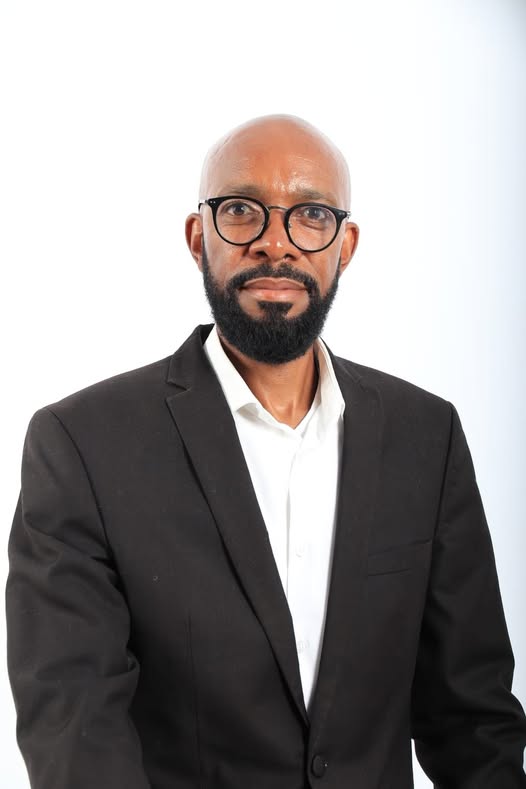
Phathisani Moyo is the head of the South Africa Desk at TechCabal. He is a Zimbabwean-born journalist based in South Africa with almost 20 years of experience covering business, technology and public affairs across Africa, and he has travelled to 25 African countries.
What is TechCabal?
TechCabal is a pan-African technology publication founded about 13 years ago, covering startups, enterprise, the workplace and the wider tech ecosystem, with offices in Lagos and Nairobi and about 140 staff.
When is the TechCabal Moonshot conference?
Moonshot happens in Lagos on 28 and 29 October 2026, and it is the event's fifth year.
What did Phathisani Moyo say about AI policy in South Africa?
He said the country lost time when an AI-assisted draft policy contained invented content, that policy must be updated constantly because AI moves fast, and that AI must be applied responsibly.
Where can I listen to Just Business?
Just Business airs on JustGospel Radio, which streams 24/7 at justgospelrtv.co.za, and this episode is on Spotify.